Natural Dyeing in Irish Weaving: From Bog Myrtle to Woad
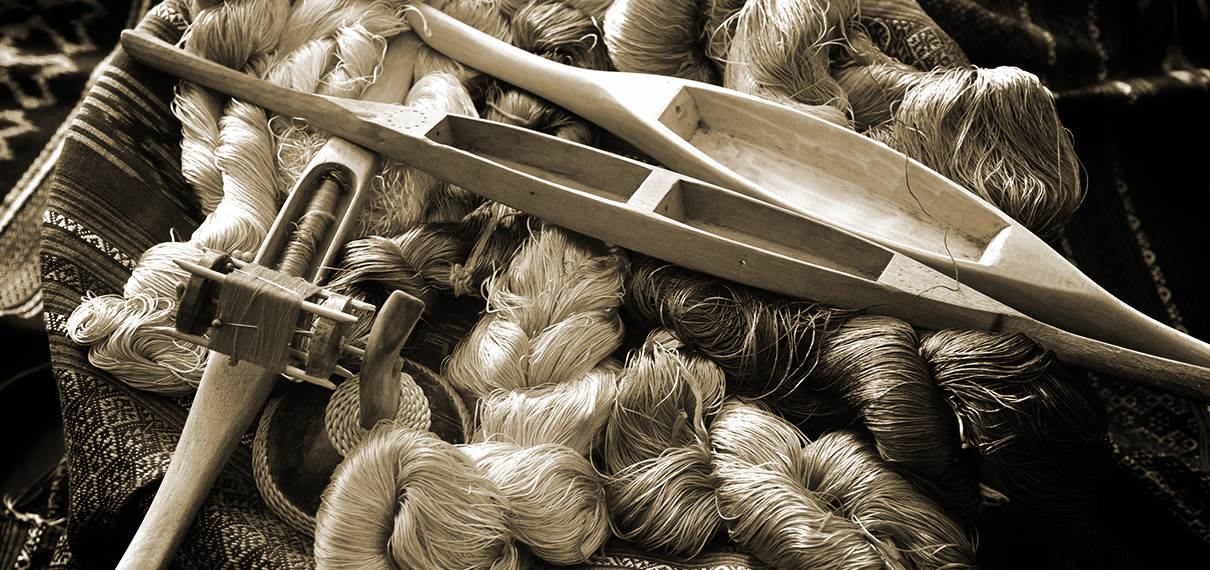
Weaving is an ancient skill that has been central to the cultural heritage of Ireland for centuries. Evidence of weaving has been found in Ireland dating back to the Bronze Age, including spindles and loom weights. Fragments of cloth from 700BC were found in a bog in County Antrim, and this has been an industry that has supported families and communities for many years. Clothing and blankets were made from sheep’s wool and woven and dyed to create items that reflected the wearer’s status and social rank, and this is a trend that continues to this day.
At Weavers of Ireland, we work with local artisans to collate beautiful woven artefacts that showcase the very best of Irish heritage and style, and traditional skills are used wherever possible. The colours we see in quality woven garments today are inspired by the natural colours of the landscapes and seascapes around Ireland. Plants, flowers and roots have been used to dye cloth and wool for many, many years, and they are often still a part of the traditional weaving process, particularly in recent years as people have become more concerned about the health implications of some synthetic dyes.
Heritage Dyes in Nature
Since humans have been wearing clothing, they have used colours to add interest or to denote status, and these have almost always come from natural plant, mineral and even animal sources. There are many plant-based dyes still in use today, although many colours are now created using chemical mixes. Let’s explore some of the colours we know and love, and the way they have been made throughout the years:
• Indigo. Historically, indigo dye was the preserve of the rich, as it was made from plants such as Indigofera tinctoria. These plants are commonly found in the Indian subcontinent, so they were relatively rare compared with flora and fauna from local environments, and the relatively low concentration of colour in the plants made them challenging to work with. These factors meant that purples and blues were associated with high status in Ireland. Indigo dyed remnants of fabric found in Peru date back around 6,000 years, and it has been used in dyeing fabrics, especially silk, for many centuries in Asia, as well. It was cultivated on a large scale in India around two thousand years ago, and from there it became popular as a luxury in Greek and Roman civilisation. Indigo was rare in Europe throughout the Middle Ages, ensuring that only royalty and the aristocracy could afford it, and similar colours were achieved here with woad, which was more accessible. However, as trade routes were established, indigo became commercially available. Today, synthetic indigo dyes are a popular choice, and this is seen as a simple and affordable alternative for most applications. It is used in jeans and other denim applications on a large scale worldwide.
• Woad. Woad is a natural dye that creates an almost identical colour to indigo, but it is of a lower quality and comes from the Isatis tinctoria woad plant, which can be grown in Europe. However, it is a challenging plant to grow, since it rarely grows in the wild and strips nutrients from the land, causing serious consequences for farming. Woad was used by Queen Boudica and by tribes in ancient Britain, and features in Braveheart as the paint used by warriors for protection and camouflage. Woad can be used to dye any natural fibre, and fibres that come from animals often take the dye most effectively. Today, synthetic dyes are used more frequently, although woad is still used in specialist printing and artisan crafting.
• Nettles. Many people see nettles as a weed that should be avoided at all costs, but did you know that they are extremely nutritious and also an excellent dye? Fresh nettles, which usually means nettles that grow in the springtime, tend to give a bright green colour, while nettles picked later in the year will produce a darker shade of green. Experiments with nettles are a great way to explore natural dyes for very low cost. Nettles can also be used to make materials, stripping the cordage from the stems and weaving it to create a sustainable fabric that can be used to make clothing and homewares.
• Madder Root. Red and orange colouring was traditionally achieved using Madder root, and brownish reds were produced with Dock roots. These plant roots can still be obtained from specialist suppliers, and they produce effective, earthy shades that are much loved for their natural and sustainable production methods.
• Alkanet. The roots of the Alkanna tinctoria plant could be used to produce gorgeous shades that include lavender and purple, as well as greys, and these are often used to colour textiles, as well as soaps and oils. Producing dyes from roots such as Alkanet can be a lengthy process, and the roots are usually steeped for several days to release the required dye, using alcohol extraction to achieve the deepest reds.
• Bog Myrtle. Bog Myrtle has long been used to create shades of yellow, green and brown when dyeing natural fabrics, and the leaves, stems, and twigs can all produce different colours. The leaves and stems of the Myrica gale plant, known as Bog Myrtle, can produce a strong shade of yellow or ochre, and this can be mixed with iron sulphate to create green shades. The twigs of the same plant can be soaked for many weeks to give a rich brown that is often a popular choice for natural fabrics.
• Weld. Weld is a plant renowned for the strong, bright yellow it produces, and it is also called ‘dyer’s rocket’ or yellow weed. It is especially effective on wool, silk and cotton, particularly when used with an alum mordant to fix the colour. Dyes can be combined, and re-dyeing a fabric with Indigo or Woad after using Weld can create a shade known as ‘Lincoln Green’.
• Lichen. Lichen is an old favourite for dyeing fabric, and is even mentioned as a dye in the Bible. The different types of lichens produce different colours, including purples, pinks and browns. Wolf Lichen is a great option to produce a neon type yellow, while Orchil Lichens can create purples, pinks and reds. When dyeing with Lichens, they must be fermented for several weeks in ammonia and water to develop their intense colours. Traditionally, this fermenting would have been carried out in vats of stale urine, making dyeing a rather smelly task! Many species of Lichen are very slow-growing and rare, so it is important not to overharvest them if you are using them in dyeing projects today.
• Seaweed. The abundance of seaweed on the Irish coast makes it a great option for dyeing fabric, and many types of seaweed can produce greens, browns and greys, as well as pinks and purples that reflect the natural landscapes in Ireland. Seaweed is a particularly important plant to the people of Ireland since it has been relied upon as a food source in times of scarcity, so it has an especially strong connection with the heritage we celebrate with our woven clothing and homewares.
There are many other plants and roots, and even insects such as cochineal, that can produce great results when dyeing fabric naturally, and many modern artists and craftspeople continue to experiment with both traditional options and new variations. Many of the items in our catalogue feature naturally dyed wool and fabric, and we are proud to preserve these heritage skills for future generations to enjoy.
Dyeing Techniques Through the Ages
Ireland’s history of weaving and dyeing is closely tied to the Irish landscape, and the colours we still see in garments today are taken from the plants, lichens, insects and minerals naturally found on the land. In the Bronze Age, around 2000 BC, dyeing was already practised, with fragments of coloured wool indicating the knowledge of dye extraction and fixation. It was vital to understand when plants would be in season and how to harvest them and extract the dyes, which was usually via soaking or boiling.
Mordants are an important part of the dyeing process, fixing the colour to the cloth and adding colour variations, and early versions included urine, wood ash and plants that were rich in tannins. Mordants are still used today, although these are usually chemical-based.
For centuries, dyeing was tied to cultural status and colours such as indigo were reserved for the wealthy, while dyeing techniques became more refined. Craftspeople began repeating dye baths for deeper colours, as well as layering colours and creating more defined shades. Colours may have varied according to geographical area, and by the 19th century, some synthetic aniline dyes were introduced. These could produce bright, stable colours, and dyeing with natural material became a rare skill that is today experiencing a revival, thanks to environmental concerns and an appreciation of artisanal skills.
Women and Weaving Traditions in Ireland
Weaving is a unique and empowering industry in that it has centred on women for millennia, and from cottage industry to international weaving house, it is rooted by the fireside or in circles of women. While men tended to farm and shear the sheep, women’s labour was based in the home, often caring for children as they carried out their spinning, dyeing and weaving. These skills were passed down through generations, and it is this history we aim to preserve today when we celebrate slow fashion that uses natural fabrics and traditional skills.
As early as 600AD, ancient Brehon Laws referred directly to weaving, laying out explicitly that spinning and weaving equipment should remain with women who were divorced by their husbands so that they could support themselves. This recognises the financial value of the craft and the importance of weaving and traditional crafts in developing an independent means of survival. This is a fairly unusual recognition of the need for women to support themselves, and is a clear indication of the value of weaving in Ireland at this time.
Through becoming experts at both weaving and dyeing, women were able to become experimental scientists and develop a truly remarkable craft, which continued to be important in sustaining the household economy throughout the Industrial Revolution and in modern times. The close connection with nature cannot be overlooked, and the extensive knowledge of seasonal change, planting and fermenting was vital to this industry. Mordants such as alum and urine also required a careful and experimental approach, and the incredible skill and talent developed by the fireside endures in the garments we know and love today.
From Home to Factory
Until the 13th century, weaving was solely a ‘cottage industry’, with individuals - usually women - working in their own homes. From this time, there is evidence that urban weaving industries were beginning to develop, and over time, this became a system of guilds and organisations that were exporting cloth woven in Ireland all over the world. Irish Linen was a particularly prized commodity and became one of Ireland’s major exports. The migration of expert weavers such as the Huguenots from France to Ireland in the late 17th century brought new and innovative production skills that only made Irish weaving more popular worldwide.
Industrialisation meant that women were working outside the home on a large scale for the first time, with flax processing, spinning, weaving and dyeing recognised as specialist jobs in this high-value industry. Weaving machines became a more efficient solution than handweaving, and the original techniques were often lost to mainstream society. Today, we recognise the value of these skills as an important alternative to the fast fashion industry, and our catalogue reflects this.
Celebrate Irish Heritage at Weavers of Ireland
At Weavers of Ireland, we are passionate about the history of craftsmanship on which Ireland is built, and our catalogue features a stunning range of products created by local artisans. From Irish caps to Tweed overcoats, our collection includes the very best of woven, dyed and knitted items so that you can find unique and stylish options for every season. Natural fibres are a comfortable and practical choice, and they are popular all over the world and feature in many designer collections, thanks to their versatility and style.
We have a gorgeous selection of jackets, wraps and blankets made in the traditional style, with colours inspired by those seen in the Irish landscape all year round. We also have a beautiful collection of handbags and jewellery, including Celtic motifs and symbols that celebrate Irish history. Visit us in one of our stores in Ireland or explore our catalogue online today!